

Neurally has the following portfolio of solutions in the field of clinical neurophysiology.
aCUP-E. Advanced Cup Electrode for Newborns
- What problem exists?
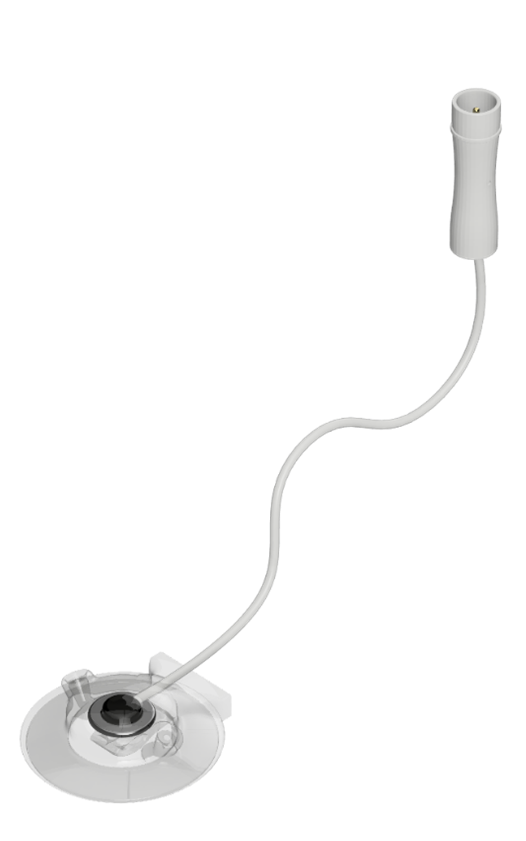
In the field of neonatal care, the innovative aCUP-E electrode emerges as a milestone in brain monitoring technology for newborns in Neonatal Intensive Care Units (NICU). Long-term recording of cerebral bioelectrical activity in newborns (aEEG) admitted to the NICU is underutilized, primarily due to the large amount of artifacts present in the recordings, which can confuse neonatologists in clinical decision-making. The aCUP-E improves this scenario with optimal brain activity recording, enhanced adhesion, simplified gel replacement, and features specifically designed to meet the needs of newborns.
-
The solution: aCUP-E
The aCUP-E represents a significant advancement in neonatal brain monitoring, improving signal quality, comfort, and providing clinicians more accurate and useful information about the newborn's brain activity. This innovation stems from a need identified by Dr. Vicenç Pascual during his clinical practice and has been created and developed by Dr. Albert Fabregat. Clinical validation conducted for the aCUP-E demonstrates its potential to improve medical decision-making and significantly reduce adverse outcomes in these vulnerable patients.
-
The impact of aCUP-E
The integration of aCUP-E into the social environment contributes directly to improving clinical outcomes and potentially reducing long-term health problems in neonates. In addition, aCUP-E can enable health professionals to intervene in a timely manner, optimazing the treatments and developmental trajectories of children.
EPlacement
-
What problem exists?
In several electrophysiological, diagnostic or therapeutic tests, such as evoked potentials or repetitive transcranial magnetic stimulation, specific cranial points close to the underlying cerebral cortex must be determined. These locations are internationally standardized and follow a percentage pattern called the International 10/20 system. Since each individual has a different cephalic size and shape, an individualized positioning calculation is required.
A tape measure is commonly used to determine the different points. This operation, which involves taking measurements and making calculations, is sometimes performed in stressful situations by the clinical staff, such as during an overnight shift in an intensive care unit with a high care load. This makes the relevant measurements and calculations affected by the conditions under which they are performed and therefore susceptible to errors. These small errors in the position of the electrodes can lead to large changes in the acquired bioelectric signal or in the appropriate position for electromagnetic treatment in electrophysiological tests.
-
The solution: EPlacement
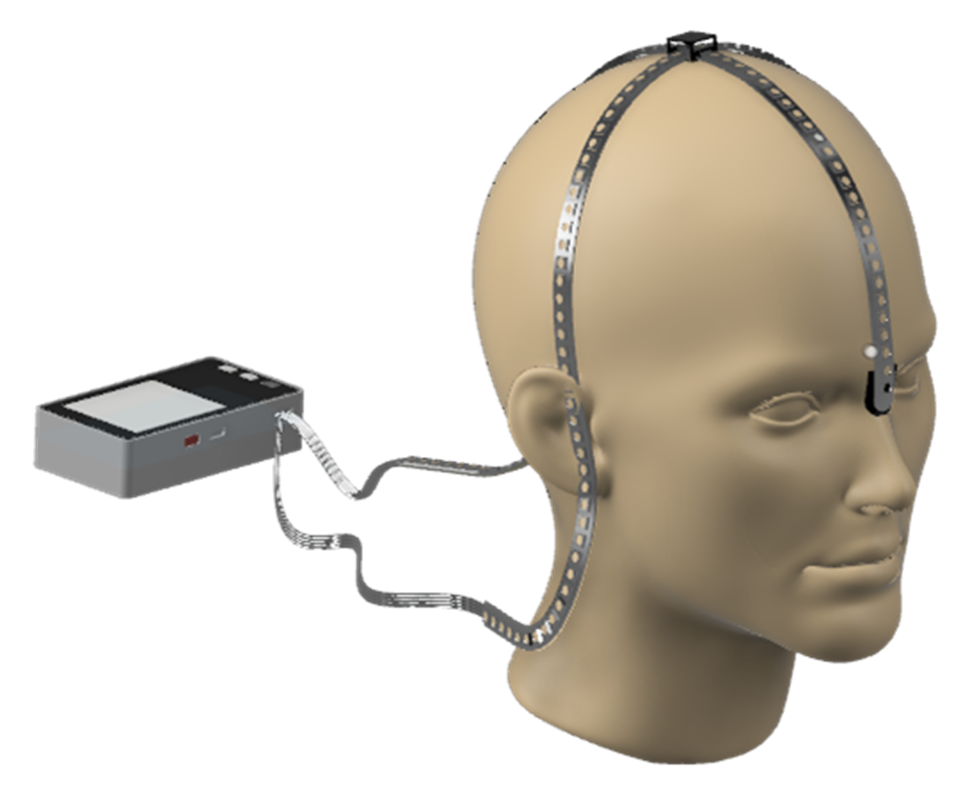
The team has developed EPlacement, a device with an advanced cephalic point localization system, which facilitates diagnosis in all neurological tests that require the placement of electrodes on the scalp. With a reduced cost, it allows easy, fast and accurate placement of electrodes on the head without the need for mathematical calculations and measurement readings, thus eliminating the errors associated with the conventional method.
-
The impact of EPlacement
Through an advanced anatomical point localization system, this device enables quick, precise, and simple electrode placement without the need for mathematical calculations or manual measurements. By reducing errors associated with conventional methods, EPlacement improves accuracy in neurological tests and ensures proper electrode placement according to the international 10/20 system. This contributes to more accurate and reliable results in the diagnosis of various neurological conditions.